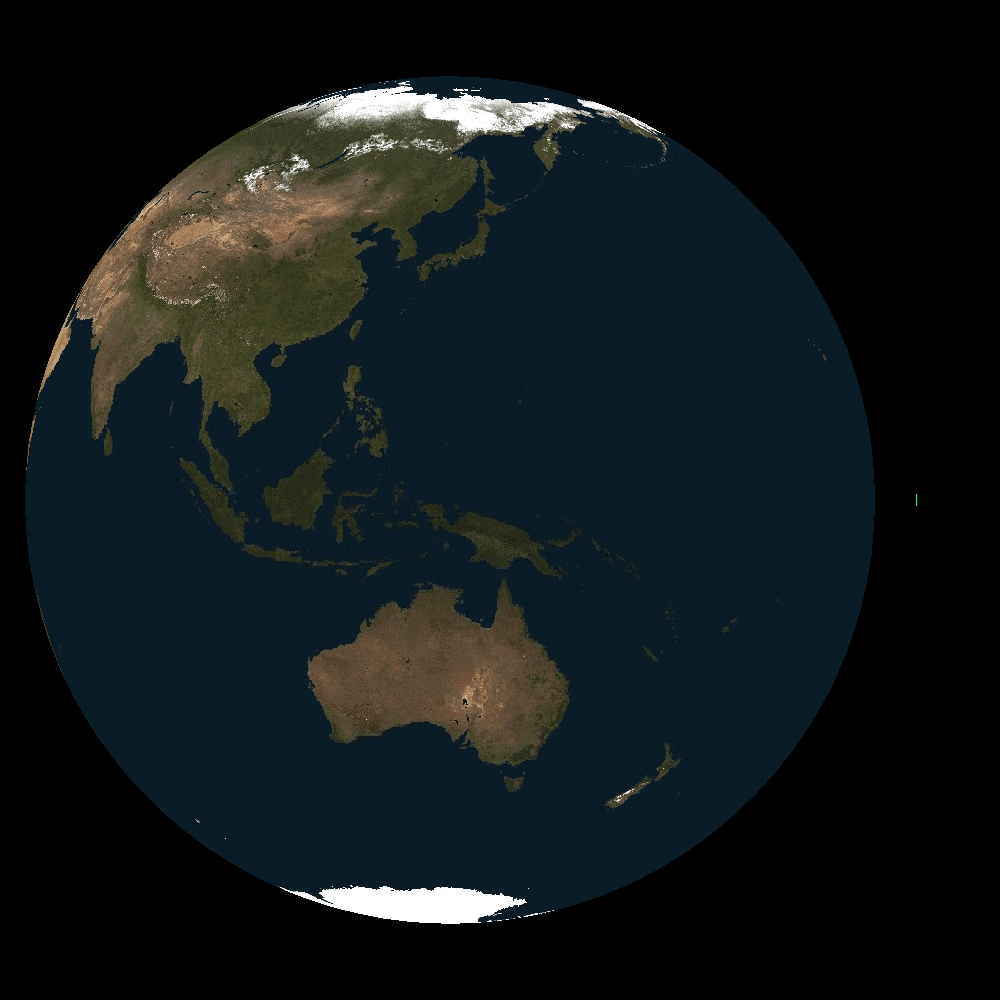
Earth VS largest earthling
This image shows the Earth and a 180-kilometre-long turquoise line next to it. That line represents the size of this guy, a plant of the Posidonia australis species of seagrass found in Shark Bay in Australia that has managed to cover an area of 200 square kilometres and a distance of at least 180 kilometres of seafloor through cloning - a method of reproduction where a new plant grows directly out of the old one, essentially generating more of the exact same organism. To date, this plant is the largest known living organism on Earth by linear size and area. The largest known earthling by mass is our favourite Utan, Pando. With an area of 43-44 hectares (0.4 km2), he would be invisible at this scale. Even the pixel-thick line representing the Shark Bay weed is much too wide, actually - even if the plant was perfectly rectangular, it would have to be just over 1 kilometre wide to have an area of 200 km2.