What everything looks like
If you're like me then I'm sure you've sometimes wondered what the entire Cosmos would look like if it were possible to see it all at once. It must be a spectacular view, all these countless billions of galaxies, each home to countless worlds, all in one image. It would probably cause one hell of an overview effect.
Problem is, it's impossible to see the entire Universe, even if you have a magical infinitely powerful telescope. No matter how far you zoom in, there is a hard limit to how far you can see into space. This limit is due to the speed of light and the age of our universe both being finite as far as we can tell. The farther you look out into space, the farther you look back into time, and when you peer some 46-47 billion light-years into the void, you're looking at the beginning of time (or at least the earliest moment at which light could propagate through space), so there's nowhere left to go beyond that point. Thus, all we can possibly see at present is a 93-billion-light-year roughly spherical chunk of space. It's likely that the observable universe is far from everything that exists, and that due to the expansion of the Universe we'll never be able to see everything all at once. Also, the farther you look, the darker and redder everything gets until it's practically invisible.
Another problem is that the Universe may be infinite. In such a case it would be logically impossible to see the whole thing.
But for the sake of satisfying our imagination, let's assume the Universe is finite and ignore the limits created by its age and the speed of light. Without further ado, here's an artistic depiction I made using some reasonable assumptions. Behold, everything:
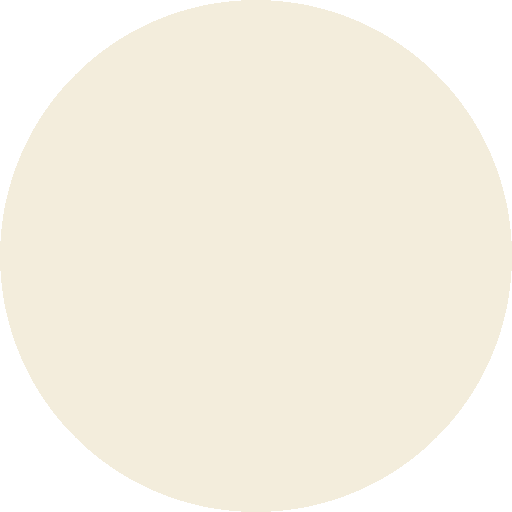
Yeah. Not exactly a space snowglobe. So what are we looking at?
Like I said, this picture is based on a few assumptions. Why isn't it a starfield or a ball of galaxies? Simple: the Universe is HUUUUUUUUUGE. Even the observable part is thought to contain trillions of galaxies, which is a fair bit more than the few dozen that are shown in some illustrations. And the whole thing is thought to be at least 20 times the size of the observable part, meaning it holds thousands of times more galaxies at the very least. It could be as much as 15 decillion light-years across according to Alan Guth, or even a mind-numbing 10^10^10^122 light-years according to some newer theories of cosmic inflation.
Something that can help visualize it, though, is the cosmological principle - the idea that our universe works the same everywhere and is therefore uniform at the largest scale, i.e. it becomes a smooth haze of galaxies if you zoom out far enough. The colour of this haze is called Cosmic Latte - the average colour of all visible galaxies, which are mostly yellowish elliptical galaxies made up of old red giant stars. It's in my opinion reasonable to assume that a very large collection of galaxies would look like a solid blob of cosmic latte, though maybe a little darker due to some galaxies obscuring others or appearing edge-on or whatever else. I don't really know, I just have a hunch that there's something that would prevent some of the light from getting to you. Still, the accumulated light from all these galaxies would certainly make the thing a lot brighter than you may have expected. This is Olbers' paradox in action, since we deliberately ignored the solution to it here.
Interestingly, it's believed that billions of years ago the Universe was instead dominated by disk galaxies like our own Milky Way, so back then it would have been a more blue colour. In the future it will gradually get darker and redder as more and more stars burn out and only long-lived red dwarfs remain.
Also, even if the Universe is finite, it probably doesn't sit in a black void. A finite universe wouldn't necessarily have defined boundaries. Think of it this way: the surface of a planet, Earth for instance, is finite - it has a finite area - but it never "ends", there's no edge that you have to be careful not to fall off of, despite the opinions of some funny people. It could be the same way with the Universe, but with another dimension added - instead of the 2D surface of a 3D sphere, space could be like the 3D surface of a 4D hypersphere. That's hard to visualize, but there are some cool consequences. For one, if the Universe is hyperspherical, that means there's a maximum possible distance between any two objects - half of the "circumference" of the Universe. Second, if you could somehow travel far enough in a straight line, you would eventually return to where you started your journey, having travelled twice that distance and circumnavigated all of space. A finite universe would also have a finite volume, which is what the picture shows.
What's at the centre, you may be wondering? That's entirely up to you, since the Universe doesn't actually have a centre. As mentioned earlier, it (if finite) acts similarly to the surface of a planet, looping around itself. Planet Earth has a centre, but its surface doesn't. There's Null Island, but that's just an arbitrary point directly south of Greenwich that humans defined; we could put that anywhere else if we wanted.
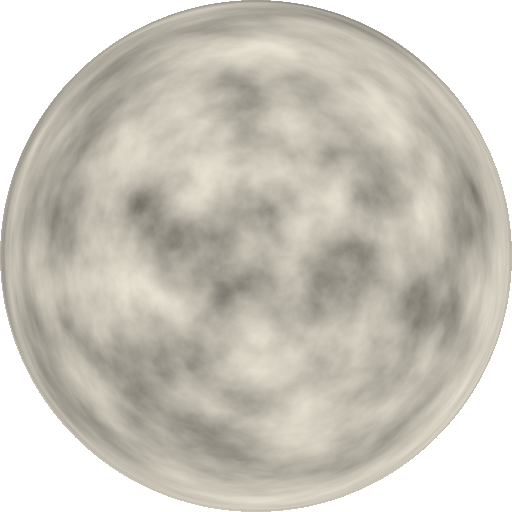
Another thing is that there is actually some structure to this seemingly featureless ball. The Universe has been expanding for a long while, at least ever since it was a dense ocean of hydrogen and helium plasma, and presumably even before that. There's evidence that the Universe was once so dense even matter as we know it couldn't exist yet. What did exist was quantum fluctuations - randomly varying amounts of energy in every tiny volume of space. These fluctuations left imprints on the forming Universe as it rapidly expanded. I've included these imprints in the model, but I'm pretty sure it would be impossible to make them subtle enough even with the power of a computer. These features would have started out tinier than an atom and then stretched to unimaginably huge proportions. Nevertheless, here's a version where these fluctuations are vastly exaggerated, just to demonstrate how structures behave in this arbitrary Universe-filling volume:
But what if...
Even though we're pretty sure the observable universe isn't nearly all there is, it's still vaguely possible that the entire Universe is smaller than the observable part. Given it loops onto itself and light can go all the way around, it's not implausible that what we think is a distant galaxy turns out to be our own Milky Way, its light having circumnavigated the Universe and reached our telescopes billions of years later. Scientists believe the Universe probably isn't a hypersphere in that case, since we would've noticed the severe curvature of space within our observable cosmos. It could, however, be finite even without a curvature - such models are called multiply-connected, and my favourite is the 3-torus, which is like a cube of space that connects to itself on every side.
At scales smaller than the observable universe, space looks a lot more interesting than a solid colour. Galaxy clusters tend to form a vast web of galactic filaments, creating a sponge-like structure. So maybe, just maybe, the entire Universe actually looks something like this: